
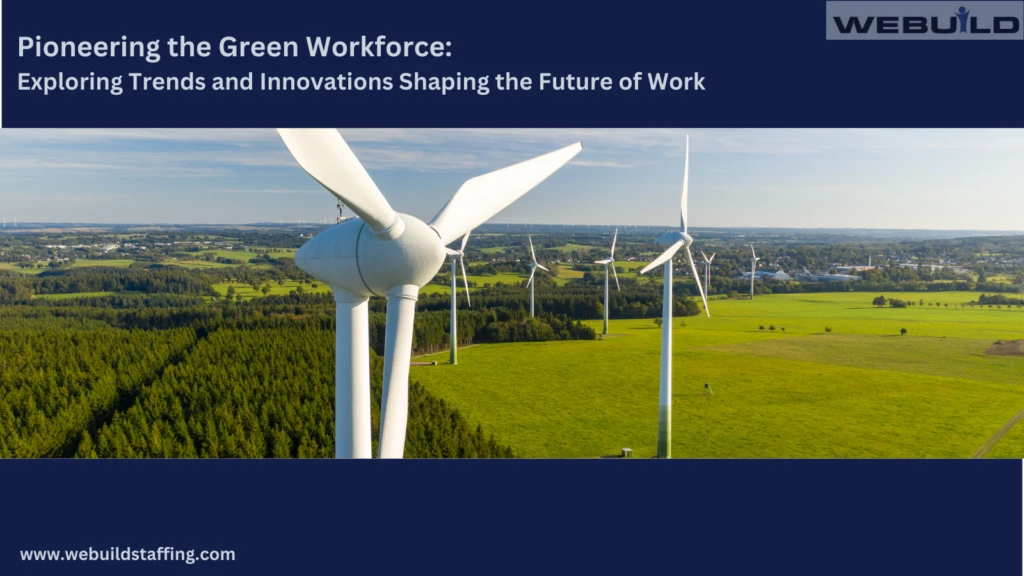
In the face of escalating environmental challenges, the green workforce dedicated to addressing these issues is evolving rapidly. From climate change mitigation to sustainable resource management, the demand for skilled professionals in environmental fields continues to surge. In this article, we delve into the transformative trends and innovative strategies reshaping the landscape of environmental staffing, paving the way for a greener, more sustainable future.
Rising Demand for Environmental Expertise (Green Workforce):
The urgency to combat climate change, preserve biodiversity, and ensure sustainable development has propelled the demand for environmental expertise across various sectors. Governments, corporations, and non-profit organizations are increasingly recognizing the need to integrate environmental considerations into their operations, driving the demand for professionals with specialized knowledge and skills.
-
Policy and Regulation: The tightening of environmental regulations worldwide is driving the need for experts in environmental law, policy analysis, and compliance. Governments are enacting stricter measures to reduce carbon emissions, protect ecosystems, and promote renewable energy adoption, creating opportunities for professionals well-versed in regulatory frameworks.
-
Corporate Sustainability: As sustainability becomes a cornerstone of corporate strategy, businesses are hiring environmental specialists to develop and implement sustainability initiatives. From green supply chain management to carbon footprint reduction, companies are seeking professionals capable of driving their sustainability agenda forward.
-
Ecosystem Management: With ecosystems under increasing pressure from human activities, there is a growing demand for ecologists, conservation biologists, and natural resource managers. These professionals play a crucial role in assessing ecosystem health, restoring degraded habitats, and developing conservation strategies to safeguard biodiversity.
Emerging Trends in Environmental Staffing:
In response to evolving environmental challenges, the field of environmental staffing is witnessing several key trends that are reshaping the way organizations recruit and retain talent.
-
Interdisciplinary Approach: Environmental issues are inherently complex and interconnected, requiring a multidisciplinary approach to problem-solving. Employers are increasingly seeking candidates with diverse skill sets and backgrounds, capable of bridging the gap between science, policy, and practice.
-
Remote Work and Virtual Collaboration: The COVID-19 pandemic has accelerated the adoption of remote work and virtual collaboration tools across industries, including environmental work. Many environmental organizations are embracing remote work policies, allowing them to tap into a broader talent pool and reduce their carbon footprint associated with commuting.
-
Focus on Diversity, Equity, and Inclusion (DEI): Recognizing the importance of diversity in driving innovation and resilience, environmental organizations are prioritizing DEI initiatives in their staffing efforts. By fostering inclusive work environments and promoting diversity in hiring practices, these organizations aim to create a more equitable and representative workforce.
-
Skills Development and Lifelong Learning: Given the rapid pace of technological advancement and environmental change, professionals in the field must continuously update their skills and knowledge. Employers are investing in training and professional development programs to equip their staff with the tools and expertise needed to navigate evolving environmental challenges effectively.
Innovations in Environmental Staffing:
To stay ahead of the curve, environmental organizations are embracing innovative approaches to staffing that leverage technology, data, and collaboration.
-
AI and Machine Learning: Artificial intelligence (AI) and machine learning are revolutionizing environmental monitoring, data analysis, and predictive modeling. Environmental organizations are leveraging AI-powered tools to analyze large datasets, identify patterns, and make data-driven decisions, enabling more effective resource management and conservation efforts.
-
Crowdsourcing and Citizen Science: Crowdsourcing platforms and citizen science initiatives are empowering individuals to contribute to environmental research and monitoring efforts. By engaging volunteers in data collection and analysis tasks, environmental organizations can gather large amounts of data at a fraction of the cost, while also fostering public awareness and participation in environmental issues.
-
Collaborative Partnerships: Collaboration is key to addressing complex environmental challenges that transcend geographic and disciplinary boundaries. Environmental organizations are forming partnerships with other NGOs, government agencies, academic institutions, and private sector companies to leverage complementary expertise and resources, driving collective action towards shared goals.
-
Remote Sensing and Geospatial Technologies: Remote sensing technologies, such as satellite imagery and drones, are revolutionizing environmental monitoring and mapping. These tools enable organizations to monitor changes in land use, deforestation, habitat fragmentation, and other environmental indicators with unprecedented accuracy and frequency, providing valuable insights for decision-making and conservation planning.
Challenges and Opportunities Ahead:
Despite the promising trends and innovations shaping the future of a green workforce in environmental staffing, several challenges and opportunities lie ahead.
-
Talent Shortages: The demand for environmental expertise is outpacing the supply of qualified professionals in many regions and sectors. Addressing talent shortages will require investments in education and training programs, as well as efforts to attract and retain diverse talent in the field.
-
Technological Integration: While technological advancements offer immense potential for improving environmental monitoring and management, integrating these tools into existing workflows can be challenging. Organizations must invest in the infrastructure, training, and capacity building needed to effectively leverage technology for environmental stewardship.
-
Equity and Access: Ensuring equitable access to environmental opportunities and resources remains a critical challenge, particularly for marginalized communities disproportionately affected by environmental injustices. Environmental organizations must prioritize equity and inclusion in their staffing efforts, addressing systemic barriers to participation and representation in the field.
-
Adapting to Climate Change: As the impacts of climate change intensify, environmental organizations will need to adapt their staffing strategies to address emerging challenges, such as extreme weather events, habitat loss, and species extinction. This may involve shifting priorities, developing new skill sets, and fostering resilience in the face of uncertainty.
The future of environmental work is characterized by rapid change, innovation, and collaboration. As we strive to address pressing environmental challenges and build a more sustainable future, the role of skilled green workforce professionals in environmental staffing will be more crucial than ever. By embracing emerging trends, leveraging innovative strategies, and fostering collaboration across sectors, we can cultivate a green workforce capable of driving meaningful change and safeguarding our planet for future generations.
Webuild Staffing Agency is a leading executive search and staffing agency dedicated to the construction, engineering and environmental industries. To learn more please visit: www.webuildstaffing.com